

The Bloating Battle: Effective Natural Solutions for Relief
Why Bloating Happens and What You Can Do About It
Natural remedies for bloating can provide quick relief when that uncomfortable, tight feeling strikes. Here are some effective solutions:
Immediate Relief:
Peppermint tea - relaxes stomach muscles
Gentle walking - helps move trapped gas
Warm compress - apply to your abdomen for 10-15 minutes
Deep breathing - calms your nervous system
Quick-Acting Herbs:
Ginger - soothes digestion
Fennel - helps release gas
Chamomile - calms intestinal muscles
Bloating affects nearly one in seven Americans according to a 2023 study, making it a very common digestive complaint. That tight, swollen feeling in your stomach isn't just uncomfortable—it can disrupt your entire day.
The sensation happens when gas builds up in your digestive tract or when abdominal muscles tense up. Your belly might look visibly larger, feel tender, or create a "pregnant" appearance.
The good news: most bloating responds well to natural approaches that address the root cause, not just the symptoms.
As Dr Andrew Greenland, I've spent years helping patients find lasting relief through functional medicine. My experience shows that natural remedies for bloating work best when combined with personalized lifestyle changes that target your specific triggers.
Understanding the Common Causes of Bloating
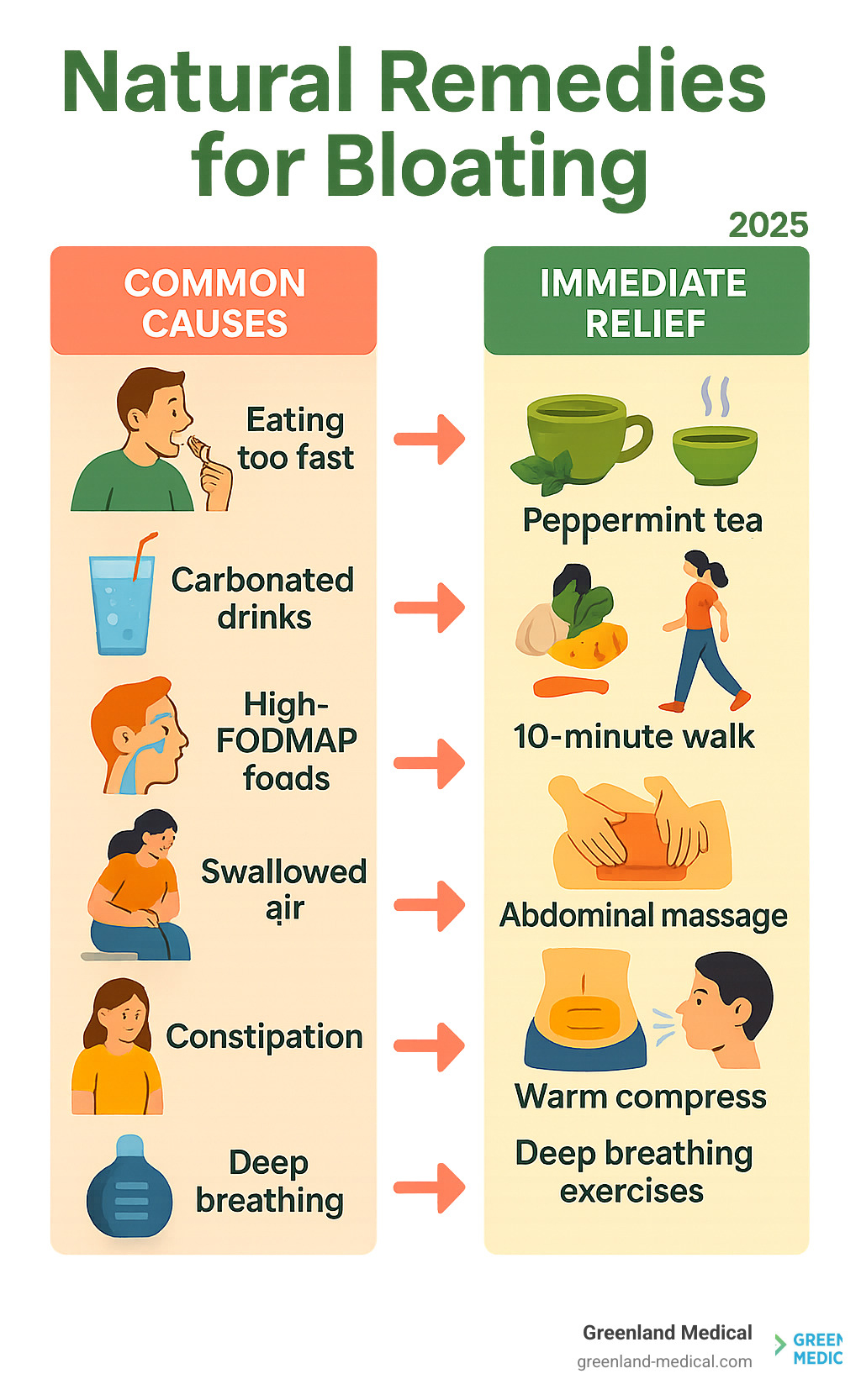
Bloating happens when gas builds up in your digestive tract, creating that uncomfortable tight and swollen feeling. The most common causes are often simple.
Swallowed air: Eating too quickly, chewing gum, or drinking carbonated beverages introduces extra air into your system.
Certain foods: High-FODMAP foods like beans, lentils, broccoli, and cabbage can ferment in your gut, producing gas. Fatty foods slow digestion, while salty foods cause water retention, adding to the puffiness.
Constipation: When waste moves slowly through the colon, it has more time to ferment and produce gas.
Hormonal changes: Fluctuations during the menstrual cycle are a common trigger for bloating in many women.
Understanding these triggers is the first step toward relief. At Greenland Medical, we help you identify your unique patterns through comprehensive food allergy and intolerance testing, taking the guesswork out of your discomfort.
How Digestive Issues Contribute to Bloating
Sometimes, bloating signals a deeper issue. Underlying digestive conditions can create chronic discomfort.
Irritable Bowel Syndrome (IBS): In this condition, the gut is hypersensitive, and even normal amounts of gas can trigger significant bloating and pain.
Small Intestinal Bacterial Overgrowth (SIBO): This occurs when bacteria from the large intestine move into the small intestine, fermenting food too early and creating excessive gas right after meals.
Food Intolerances: Unlike allergies, intolerances mean your body can't properly break down certain foods. With lactose intolerance, for example, a lack of the lactase enzyme causes dairy to ferment in the colon, producing gas.
Celiac Disease: This autoimmune condition is triggered by gluten and can cause severe bloating and intestinal damage.
Gastroesophageal Reflux Disease (GERD): While known for heartburn, GERD can contribute to bloating through increased air swallowing.
These conditions are treatable. Our personalized approach at Greenland Medical focuses on uncovering the root cause of your bloating, using modern diagnostics and natural therapies to restore digestive harmony.
Immediate Natural Remedies for Bloating Relief
When that tight, uncomfortable feeling hits, you want relief fast. Fortunately, several natural remedies for bloating can ease the sensation quickly.
Gentle Movement: A leisurely 10-15 minute walk after eating stimulates your digestive tract, helping trapped gas move along naturally.
Herbal Teas: A warm cup of peppermint, ginger, or chamomile tea can relax stomach muscles and reduce swelling within minutes.
Abdominal Massage: Lie down and use gentle, clockwise circular motions around your belly button to encourage gas to move through your large intestine.
Heat Application: A warm compress or hot water bottle on your abdomen can relax tense muscles and ease discomfort.
Soothing Herbal Teas and Spices
Herbs and spices with carminative properties are excellent natural remedies for bloating because they help relax digestive muscles and reduce inflammation.
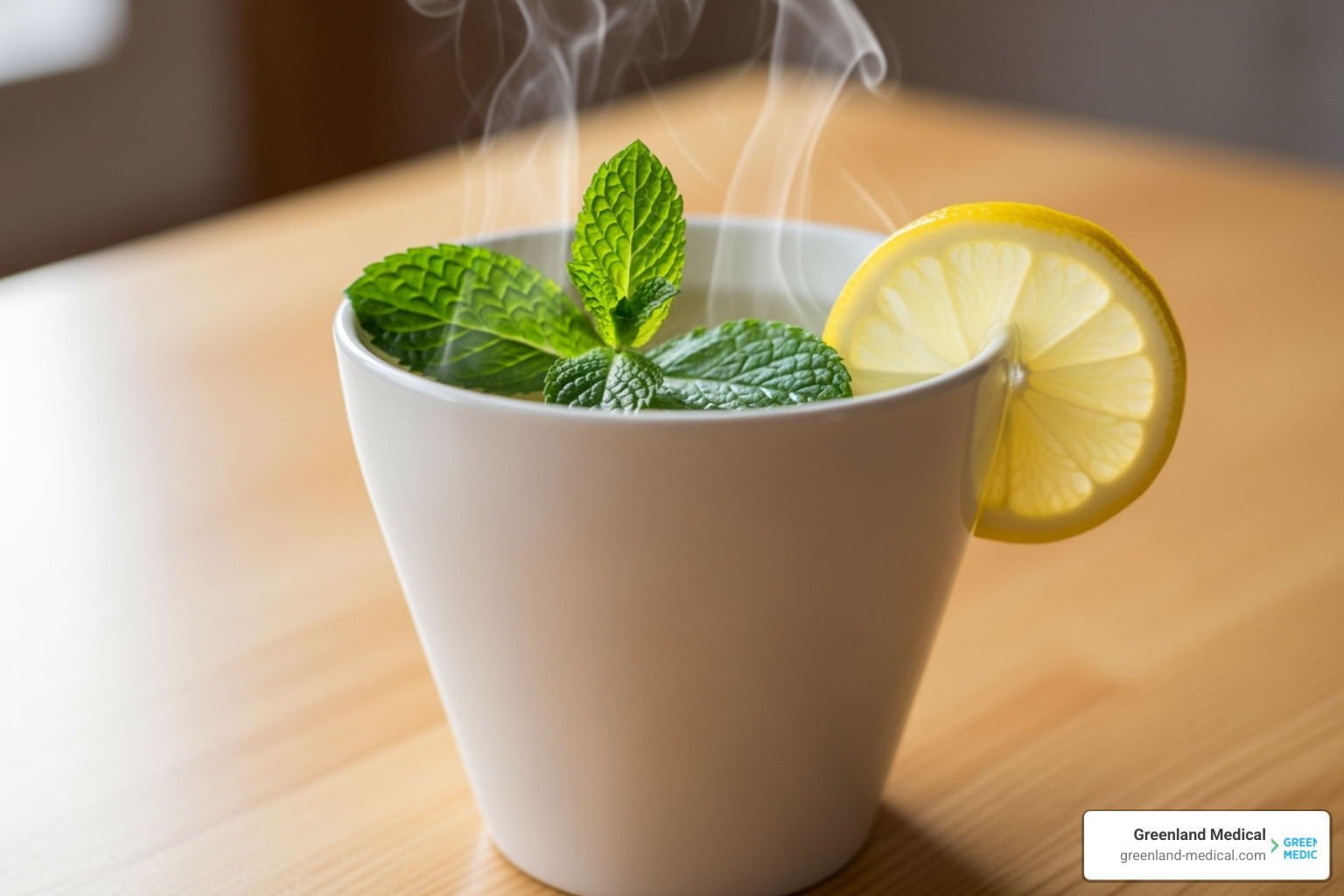
Peppermint: This herb relaxes intestinal muscles, helping trapped gas pass more easily. Studies show peppermint oil can significantly improve bloating in people with IBS.
Ginger: A warming, anti-inflammatory root that stimulates digestion and soothes upset stomachs.
Chamomile: This gentle flower has anti-inflammatory compounds and calming effects that settle an overactive gut, especially if stress is a factor.
Fennel: Chewing fennel seeds or drinking fennel tea helps expel gas from the intestines.
Anise: Similar to fennel, anise helps relax digestive muscles and reduce gas, showing promise for IBS-related bloating.
At Greenland Medical, our herbal medicine services can help integrate these powerful plants into your personalized wellness plan.
The Power of Mindful Eating
How you eat is as important as what you eat. Rushed eating can lead to swallowing air and poor digestion, causing bloating. Practice mindful eating to prevent discomfort:
Eat Slowly: Aim for meals to last at least 20 minutes. Put your fork down between bites.
Chew Thoroughly: Chew food until it's almost liquid to reduce the work for your stomach.
Avoid Distractions: Focus on your meal instead of screens to better recognize your body's fullness cues.
Listen to Your Body: It takes about 20 minutes for your brain to register fullness. Eating slowly helps you stop before you're uncomfortably full.
Gentle Movement and Physical Activity
Gentle movement helps get things flowing through your digestive system.
Walking After Meals: A 10-15 minute walk after meals significantly reduces bloating by stimulating the natural contractions of your intestines.
Yoga Poses: Specific poses can offer targeted relief. Child's Pose gently compresses the abdomen, while Happy Baby Pose uses gravity to encourage gas release.
Abdominal Stretches: Gentle twists, whether seated or lying down, can also provide relief.
Regular, gentle physical activity also helps manage stress, which has a significant impact on gut health. Consistency is more important than intensity for long-term digestive wellness.
Long-Term Strategies and Natural Remedies for Bloating
While quick fixes are helpful, true digestive comfort comes from building habits that prevent bloating. Sustainable lifestyle changes make all the difference by addressing the root causes.
Our naturopathy services are built on this philosophy. We help patients in Richmond, Twickenham, and London find their unique path to wellness through personalized natural approaches.
Optimizing Your Diet for a Flatter Tummy
Your diet is a powerful tool for managing bloating. It's about creating a way of eating that supports your digestive system daily.
Increase Fiber Slowly: Fiber prevents constipation, a major cause of bloating. Introduce it gradually to allow your gut to adjust. Aim for a mix of soluble fiber (oats, apples) and insoluble fiber (whole grains, nuts).
Eat Probiotic-Rich Foods: Probiotics are beneficial bacteria found in yogurt, kefir, and sauerkraut that help balance your gut, reducing gas. Prebiotic foods like garlic and onions feed these good bacteria.
Stay Hydrated: Water prevents constipation and helps flush out excess sodium that causes water retention. Aim for 6-8 glasses daily.
Reduce Sodium: Processed foods are high in salt, which makes you feel puffy. Cooking at home helps you control your sodium intake.
Keep a Food Diary: Tracking your food and symptoms can reveal connections between specific foods and your bloating.
Consider a Low-FODMAP Diet: For some, especially those with IBS, this diet can identify trigger foods. It's restrictive and best done with professional guidance.
The Role of Probiotics and Hydration
Probiotics and hydration are foundational for digestive health.

Probiotics restore balance to your gut microbiome. By introducing beneficial bacteria, they help break down food more completely and reduce gas production. You can get them from fermented foods or a targeted supplement. We often recommend specific strains based on individual needs.
Water is the unsung hero of digestion. It prevents constipation by keeping stool soft and helps your kidneys flush out excess sodium. Try to sip water throughout the day rather than drinking large amounts with meals, which can dilute digestive enzymes for some people.
When to See a Doctor for Persistent Bloating
While most bloating responds to natural remedies for bloating, it's important to know when your body might be signaling a more serious issue. If you experience persistent, severe bloating that doesn't improve with lifestyle changes, it's time to see a healthcare professional.
Seek medical advice if your bloating is accompanied by any of these red flag symptoms:
Severe abdominal pain that is sharp, intense, or worsening
Unexplained weight loss
Significant changes in bowel habits (new patterns of diarrhea or constipation)
Blood in your stool (bright red or dark and tarry)
Fever
Persistent vomiting or loss of appetite
As Dr. Aminat Ogun advises, these warning signs should not be ignored. They could indicate conditions like celiac disease, Crohn's disease, ovarian cysts, or other issues requiring proper diagnosis.
At Greenland Medical, our functional medicine approach works to uncover the root cause of your chronic bloating. We use comprehensive testing to identify hidden food sensitivities, bacterial imbalances, or hormonal disruptions, creating personalized treatment plans that address the actual cause of your symptoms.
Don't suffer in silence if natural remedies aren't enough. Your gut health is crucial to your overall well-being.
Frequently Asked Questions about Natural Remedies for Bloating
Here are answers to some of the most common questions about bloating.
What relieves bloating fast?
For quick relief, try these natural remedies for bloating:
Light physical activity: A 10-15 minute walk helps move trapped gas.
Herbal teas: Peppermint, ginger, or chamomile tea can relax digestive muscles quickly.
Yoga poses: Child's Pose or Happy Baby Pose can help release trapped air.
Warm compress: Applying a hot water bottle to your abdomen for 10-15 minutes can ease cramping.
Does drinking water help with bloating?
Yes, staying hydrated is crucial. Water helps in two key ways:
It prevents constipation, a major cause of bloating, by keeping stool soft and moving.
It helps flush out excess sodium, which reduces water retention and puffiness.
For best results, sip water throughout the day rather than drinking large amounts with meals.
Am I bloated or is it fat?
It's a common concern, and the difference is usually clear:
Bloating is temporary and fluctuates. Your stomach may feel tight, full, and look larger after meals, but it typically returns to a more normal size. It's caused by gas or fluid.
Body fat is consistent and soft. The size and feel of abdominal fat do not change dramatically from hour to hour or day to day.
If your belly size changes significantly throughout the day, you are likely dealing with bloating, which is manageable with the right lifestyle adjustments.
A Holistic Approach to Beating the Bloat
Lasting relief from bloating comes from a comprehensive, personalized approach, not a single quick fix. The most effective natural remedies for bloating address multiple areas of your health.
Combining dietary changes, mindful eating, gentle movement, and herbal support consistently is key. Small, daily actions create significant, long-term relief. However, the most crucial step is identifying your personal root cause.
After years of helping patients in Richmond, Twickenham, and London, we know that bloating can stem from hidden food sensitivities, gut imbalances, or chronic stress. This is where the Greenland Medical approach makes a difference. Our integrative medicine services combine modern diagnostics with natural therapies to find out why you are bloated.
By uncovering the root cause—whether it's a bacterial overgrowth, a food trigger, or something else—we create a personalized plan to optimize your entire digestive system. This means we're not just treating symptoms; we're aiming for long-term health and comfort.
Your journey to digestive wellness is unique. With patience, consistency, and the right professional guidance, you can make that uncomfortable, tight feeling a thing of the past.
