

The Allergy Detective: A Guide to Getting Tested for Food Sensitivities
Why Understanding Food Allergy Testing Matters for Your Health Journey
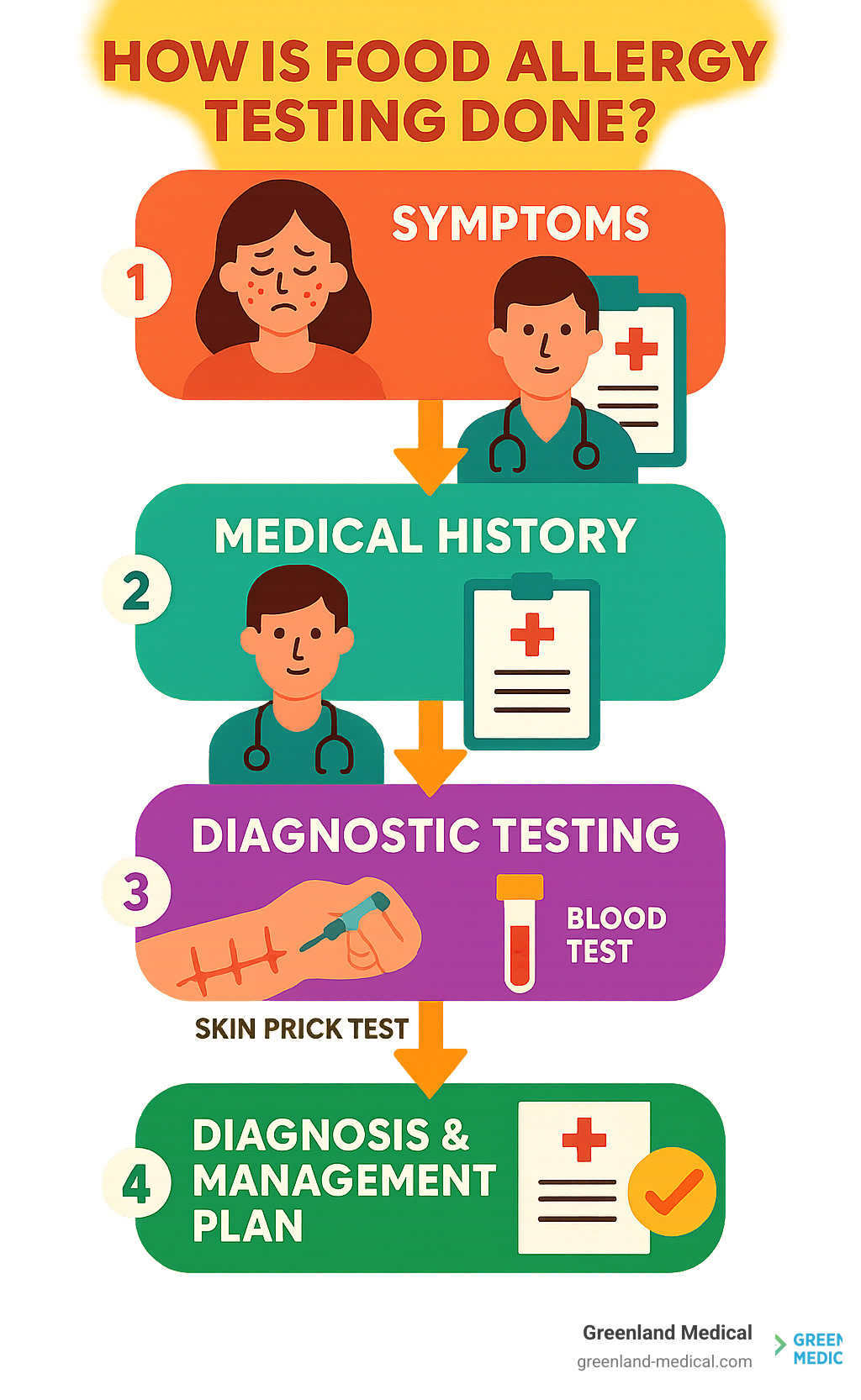
If you experience symptoms like hives, swelling, or digestive upset after eating, you may have a food allergy. However, there's no single perfect test to confirm it. An accurate diagnosis of how is food allergy testing done requires combining your medical history with specific diagnostic tests.
Main Testing Methods:
Skin Prick Test (SPT) - Places allergen extracts on skin; results in 15-20 minutes.
Blood Test (IgE) - Measures allergic antibodies in blood; results in 1-2 weeks.
Oral Food Challenge - The most accurate test, involving supervised food consumption.
Medical History - The essential first step, documenting symptoms and reactions.
Proper testing is crucial to determine if your immune system is overreacting (an allergy) or if you have a food intolerance or sensitivity. The process, guided by a board-certified allergist, typically starts with a detailed history, followed by tests like skin pricks for quick results, blood tests for specific antibodies, or oral food challenges for definitive answers.
I'm Dr Andrew Greenland, a medical doctor and Certified Functional Medicine Practitioner. At Greenland Medical, I help patients steer the complexities of food reactions by uncovering the deeper inflammatory and immune imbalances that often drive them.
Is It an Allergy, Intolerance, or Sensitivity?
Before exploring how is food allergy testing done, understand the difference between a food allergy, intolerance, and sensitivity. These terms are not interchangeable, and knowing which applies to you is the first step in solving your food reactions.
A food allergy is an immune system response. Your body mistakenly identifies a food protein as a threat and produces Immunoglobulin E (IgE) antibodies. When you eat the trigger food, these antibodies cause immune cells to release chemicals like histamine, leading to a reaction within minutes to a couple of hours. Symptoms can include hives, swelling, breathing trouble, or even life-threatening anaphylaxis.
In contrast, a food intolerance is a digestive system issue. Your body lacks the enzymes to break down a certain food, like in lactose intolerance. This leads to digestive symptoms like bloating, gas, or diarrhea, which typically appear hours later and are not life-threatening.
The key differences are the bodily system involved, symptom onset, and severity.
Feature Food Allergy Food Intolerance/Sensitivity Trigger Immune system (IgE antibodies) Digestive system (lack of enzymes, chemical reactions) Bodily System Immune system (can affect multiple organs) Digestive system (primarily) Symptom Onset Rapid (minutes to a few hours) Slower (hours to days) Potential Severity Mild to severe, potentially life-threatening (anaphylaxis) Generally mild to moderate, not life-threatening
At Greenland Medical, our comprehensive food allergy and intolerance testing examines the whole picture. Understanding your reaction type helps determine the most useful tests, which we'll explore next.
The First Step: Your Health History is the Map
When dealing with symptoms after eating, your first stop is a qualified healthcare provider. This initial conversation is often the most revealing part of the diagnostic process.
Your patient history provides crucial clues for determining how is food allergy testing done effectively for you. We conduct a physical examination and a detailed discussion covering several key areas:
Food and Symptom Diary: We'll review what you eat, when symptoms appear, and their severity. This helps identify patterns.
Reaction Timing: A rapid reaction (hives within minutes) suggests a different cause than a delayed one (stomach cramps hours later).
Family History of Allergies: A family history of food allergies, asthma, or eczema can indicate a genetic predisposition and provides important context for your symptoms.
During the physical exam, we look for visible signs like skin irritation or digestive distress that support your reported symptoms. This thorough groundwork allows us to select the most relevant diagnostic tools instead of ordering a battery of unnecessary tests. If food is making you feel unwell, it's worth investigating. The American Academy of Allergy, Asthma & Immunology offers guidance on when to see an allergist for food allergies.
How is Food Allergy Testing Done? Common Medical Approaches
After reviewing your health history, we use specialized diagnostic tools to gather evidence. An experienced, board-certified allergist or functional medicine practitioner is essential for interpreting these tests, which look for IgE-mediated reactions that signal a true food allergy.

The Skin Prick Test (SPT): A Quick Surface-Level Clue
The Skin Prick Test is a common first step, providing results in about 15-20 minutes. During the test, we place drops of liquid allergen extract on your skin (usually the forearm) and gently skin prick through each drop. This allows the allergen to enter just below the skin's surface. A positive result appears as a raised, itchy bump called a wheal and a surrounding red area called a flare, similar to a mosquito bite. We also use positive (histamine) and negative (saline) controls to ensure the test is working correctly.
A positive test indicates sensitization, not necessarily a clinical allergy. This sensitization vs. allergy distinction is critical. A negative SPT is highly reliable (over 95% negative predictive value), but a positive test is only about 50% predictive of a true allergy. For this reason, a diagnosis is never based on an SPT alone.
How is food allergy testing done with a blood sample?
Blood testing measures specific IgE antibodies to foods in your blood. After a simple blood draw, the sample is analyzed in a lab. These tests, often called RAST tests or the more modern ImmunoCAP, are useful if you have severe skin conditions like eczema or cannot stop taking medications (like antihistamines) that would interfere with skin testing.
Interpreting IgE levels requires expertise. Higher levels suggest stronger sensitization but don't always predict reaction severity. False positives can occur, which is why results must be correlated with your clinical history. For more details, you can explore More about blood tests for allergies.
The Oral Food Challenge (OFC): The Gold Standard for Diagnosis
The Oral Food Challenge is the most accurate test for diagnosing a food allergy. It directly answers whether eating a specific food causes a reaction. An OFC can confirm a diagnosis when other tests are unclear or rule out an allergy, allowing you to reintroduce foods you've been avoiding.
This test must be done in a medically supervised setting due to the anaphylaxis risk. During the OFC, you consume gradual food ingestion of the suspected allergen in increasing doses over several hours. Our team is constantly monitoring for reactions and is equipped for emergency preparedness, with epinephrine and other medications on hand. An OFC provides the final verdict when other tests are inconclusive.
Beyond the Basics: Other Investigative Tools
Standard tests don't always explain symptoms, especially delayed reactions that appear hours or days after eating. These responses may involve different immune pathways that require a holistic diagnosis and root cause analysis.

How is food allergy testing done using an elimination diet?
The elimination diet is a powerful tool for identifying trigger foods causing chronic symptoms. The process involves two phases:
Elimination: You begin by removing suspected foods (like gluten, dairy, soy, and eggs) for 2-4 weeks, allowing your body to reset and symptoms to subside.
Reintroduction: You systematically reintroduce foods one at a time, with careful symptom monitoring. This reveals a direct cause-and-effect link between a food and your symptoms.
This process requires professional guidance needed to avoid nutritional deficiencies and correctly interpret results. Our functional medicine approach ensures you safely uncover your food triggers while maintaining proper nutrition.
Specialized and Emerging Tests
For complex cases, we use advanced tests to uncover delayed hypersensitivity and other immune responses.
Atopy Patch Testing: This test identifies delayed, cell-mediated reactions. Food extracts are applied to patches on your back for 48-72 hours. It's particularly useful for conditions like Eosinophilic Esophagitis (EoE).
Basophil Activation Test (BAT): This sophisticated test observes how your immune cells (cellular response) behave when exposed to an allergen in a test tube. It can be helpful when standard tests are negative but clinical symptoms are present.
Component-Resolved Diagnostics (CRD): This cutting-edge test identifies the specific proteins within a food that you're allergic to. This detail helps predict the potential severity of a reaction and whether cooking the food might make it safe to eat. It's also useful for distinguishing true food allergies from cross-reactivity with pollens.
Preparing for Your Tests and Interpreting the Results
Proper preparation is key to getting accurate food allergy test results. At Greenland Medical, we guide you through the process to ensure we get a clear picture of your health.

Getting Ready for Your Appointment
To ensure accurate results, you must prepare correctly. For skin prick testing, the most important step is stopping antihistamines at least five days before your appointment, as they block the response we need to measure. Other medications can also interfere; we will provide a List of medications that may interfere with testing beforehand.
For your appointment, please bring:
Your food and symptom diary.
A complete list of all medications and supplements.
Any questions to ask your provider.
Putting the Pieces Together for a Diagnosis
No single perfect test exists for food allergies. An accurate diagnosis requires combining patient history with test results. It's crucial to understand why a positive test isn't always an allergy. A test may show "sensitization" (the presence of IgE antibodies) to a food you eat without any problems. We look for consistency: if your history of reactions matches your test results, the diagnosis is stronger.
The role of a specialist is to interpret these nuances. Once a diagnosis is made, we work with you to create a management plan. At Greenland Medical, our functional medicine approach means we also investigate why your body is reacting, aiming to restore balance rather than just manage symptoms.
Frequently Asked Questions about Food Allergy Testing
Here are answers to some of the most common questions we hear at Greenland Medical about how is food allergy testing done.
What is the most accurate test for food allergies?
The Oral Food Challenge (OFC) is the gold standard and most accurate test. While skin and blood tests show sensitization, an OFC confirms clinical reactivity by observing your reaction to eating the food under medical supervision. It's used to get a definitive answer, especially when other tests are inconclusive.
Can I develop a food allergy as an adult?
Yes, adult-onset allergies are common. Your immune system can begin reacting to a food at any point in life, even one you've eaten for years. Unlike many childhood allergies, adult-onset allergies are less likely to be outgrown.
What happens after a food allergy is confirmed?
Confirmation shifts the focus to management. Key strategies include:
Avoidance of the allergen: This is the cornerstone of management.
Reading food labels: You must become an expert at checking ingredient lists for hidden allergens, as recipes can change.
Preventing cross-contamination: Learn how trace amounts of an allergen can get into safe foods during preparation.
Creating an anaphylaxis emergency plan: For severe allergies, this written plan outlines steps to take during a reaction.
Carrying an epinephrine auto-injector: This is a non-negotiable safety measure for those at risk of anaphylaxis.
At Greenland Medical, our naturopathic services provide comprehensive support, helping you implement these strategies and live confidently with your diagnosis.
Your Path to Clarity and Well-Being
Understanding how is food allergy testing done is the first step on your health journey. An accurate diagnosis isn't about a single test but about piecing together your health history with results from skin tests, blood tests, or an oral food challenge, all interpreted by an expert guide.
At Greenland Medical, we don't just identify triggers; we dig deeper to find the root cause of your body's reactions. Our functional medicine approach examines underlying inflammation and immune imbalances. We ask why your immune system is overreacting and what we can do to support your body's natural healing processes. This allows us to move beyond symptom management toward restoring long-term health and resilience.
Living with food reactions can be overwhelming, but you don't have to steer it alone. We are committed to empowering you with the knowledge and tools to manage your health confidently. If you're ready to find clarity, our team is here to help solve your unique health puzzle.
Learn more about our integrative medicine services and start your journey to better health. Let's find not just what's triggering your symptoms, but why—and what we can do about it.
