
The Tell-Tale Rash: Identifying Lyme Disease Symptoms
Understanding the Borreliosis Rash: Your First Clue to Lyme Disease
The borreliosis rash, medically known as erythema migrans, is often the first visible sign of Lyme disease. Recognizing it early is crucial for timely treatment.
Here’s what to look for:
What it is: An expanding red patch of skin. It’s called erythema migrans.
When it appears: Usually 3 to 30 days after a tick bite (average of 7 days).
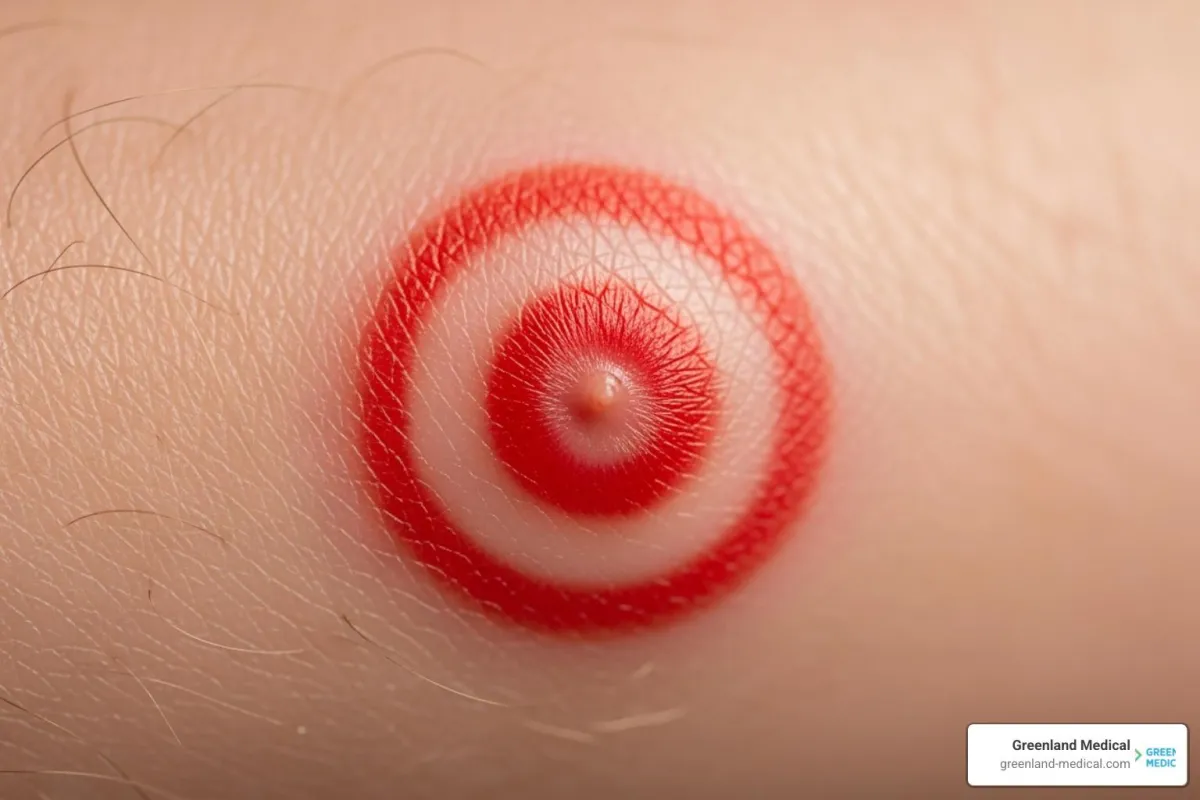
Appearance: It often starts as a small red area. It can grow very large, sometimes clearing in the center to form a "bull's-eye" pattern. However, many rashes are just uniformly red.
Sensation: It usually feels warm to the touch. It is rarely painful or itchy.
Prevalence: About 70% to 80% of people with Lyme disease get this rash.
As Dr Andrew Greenland, my work as an Integrative Functional Medicine Specialist focuses on identifying root causes for complex chronic illnesses, including those where a borreliosis rash might be an early indicator. My approach blends Western medical diagnostics with functional medicine strategies to support patients in reclaiming their health.
What is Erythema Migrans? The Signature Borreliosis Rash
Erythema Migrans (EM) is more than a simple skin rash; it’s a clear signal from your body. This distinctive skin lesion is often the first sign of an early, localized infection with Borrelia bacteria, the cause of Lyme disease. It's the body's visible alert that tick-borne invaders are spreading from the bite site. Recognizing this hallmark of the illness can make all the difference.
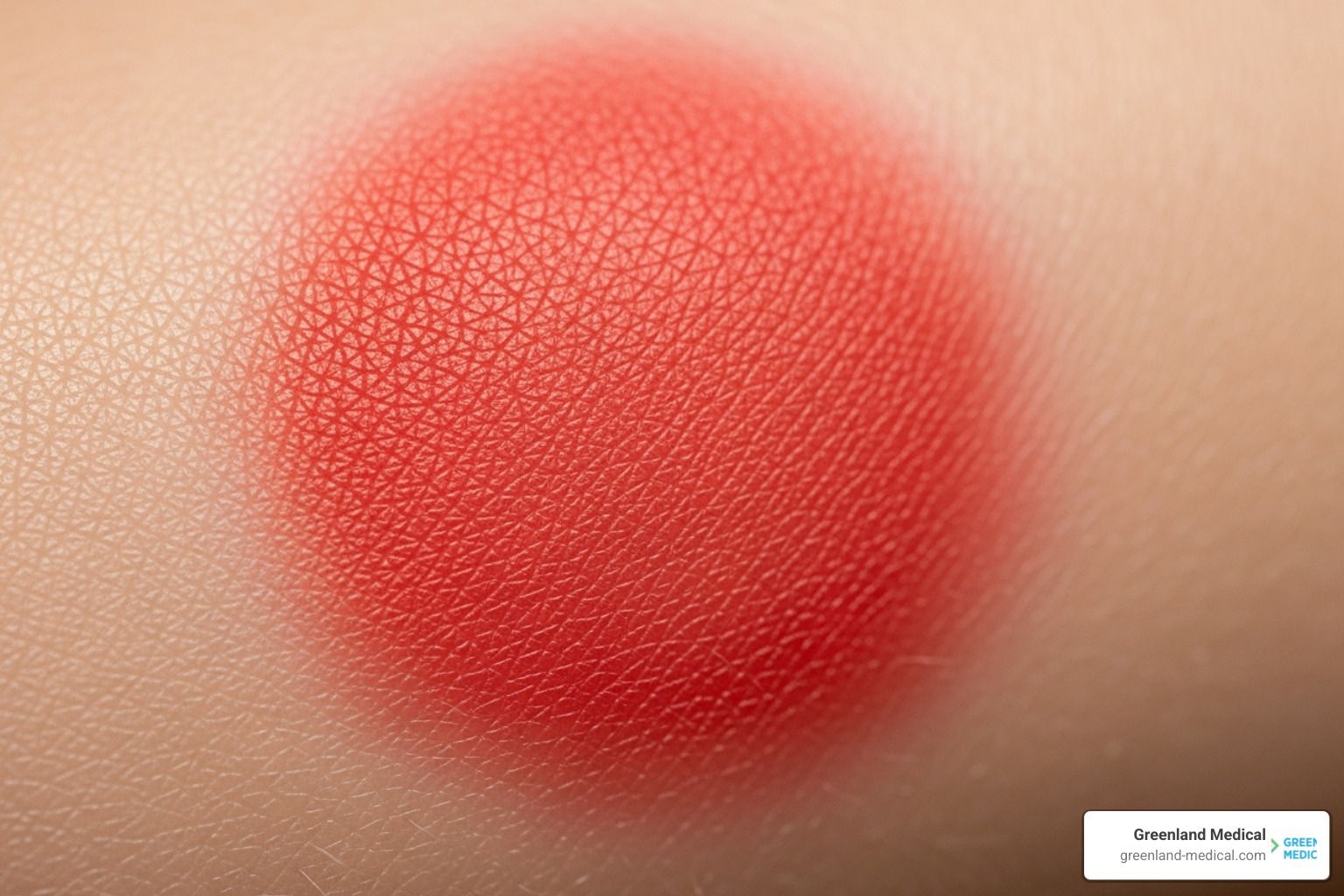
It’s important to remember that not all rashes look the same. While some might be a clear, uniformly red patch like the one above, others can appear quite different, especially depending on skin tone.
The Classic "Bull's-Eye" and Its Variations
When we hear about the borreliosis rash, most of us picture the famous "bull's-eye" or target lesion. While this iconic look with a red outer ring and clear center can occur, it's a common myth that this is the only or most frequent presentation. In reality, the classic bull's-eye form appears in only a minority of Lyme disease cases.
The truth is, erythema migrans can be a chameleon. Most often, the rash is simply a uniformly red, expanding patch without any clear center, and it can be shaped like an oval, circle, or even a triangle. Sometimes, you might notice a central crust or a vesicular rash (tiny blister-like bumps). The size can also vary wildly, from a dime to a large patch covering much of a person's back, often expanding from 4 to 20 inches (12 to 35 cm) across. The average size is around 6 inches (17 cm).
The key takeaway is that the rash is expanding over days or weeks, growing larger than 2 inches in diameter. Don't get hung up on looking for a bull's-eye; it could lead to a missed diagnosis. To see more examples, check out resources like Would you recognize these Lyme disease rashes?.
How the Borreliosis Rash Appears on Different Skin Tones
The appearance of the borreliosis rash can vary significantly across skin tones. On lighter skin, it usually shows up as a clear red or pink mark. On darker skin tones, however, the rash can be much harder to spot, appearing bluish, purplish, or even bruise-like. This can easily be mistaken for other skin conditions or overlooked entirely.
This difference in appearance increases the risk of misdiagnosis and delayed treatment for people with darker skin. Research from institutions like Johns Hopkins has highlighted these health disparities, showing that Black patients with Lyme disease are more likely to be diagnosed later and with more advanced illness compared to White patients. This delay can lead to more serious, long-lasting health issues.
Better education for both doctors and the public on the varied appearance of the EM rash is crucial for ensuring everyone has a chance at a quick, accurate diagnosis. For more details on this research, please read Research on racial disparities in Lyme diagnosis.
Rash Characteristics: Prevalence, Location, and Look-Alikes
While the borreliosis rash is one of the most recognizable signs of Lyme disease, it's important to understand that it doesn't appear in everyone. Research shows that approximately 70% to 80% of people with Lyme disease develop this distinctive rash. This means that roughly one in four people with Lyme disease won't have this visual clue at all.
The absence of a rash doesn't mean you're in the clear. If you've had potential tick exposure and are experiencing other symptoms like fever, fatigue, or joint aches, it's still worth seeking medical evaluation. The rash is a helpful diagnostic tool when present, but its absence certainly doesn't rule out infection.
Common Locations and the Significance of Multiple Rashes
Ticks are sneaky little creatures, and they prefer to set up shop in warm, moist areas where they're less likely to be finded. This means the borreliosis rash typically appears in predictable locations where ticks can attach and feed undisturbed.
The most common spots include your thighs, groin area, and trunk. Ticks also love hiding in your armpits and behind your knees – places that are naturally warm and where clothing might create perfect hiding spots. In children, we sometimes see rashes on faces since ticks may crawl higher on smaller bodies before finding their feeding spot.
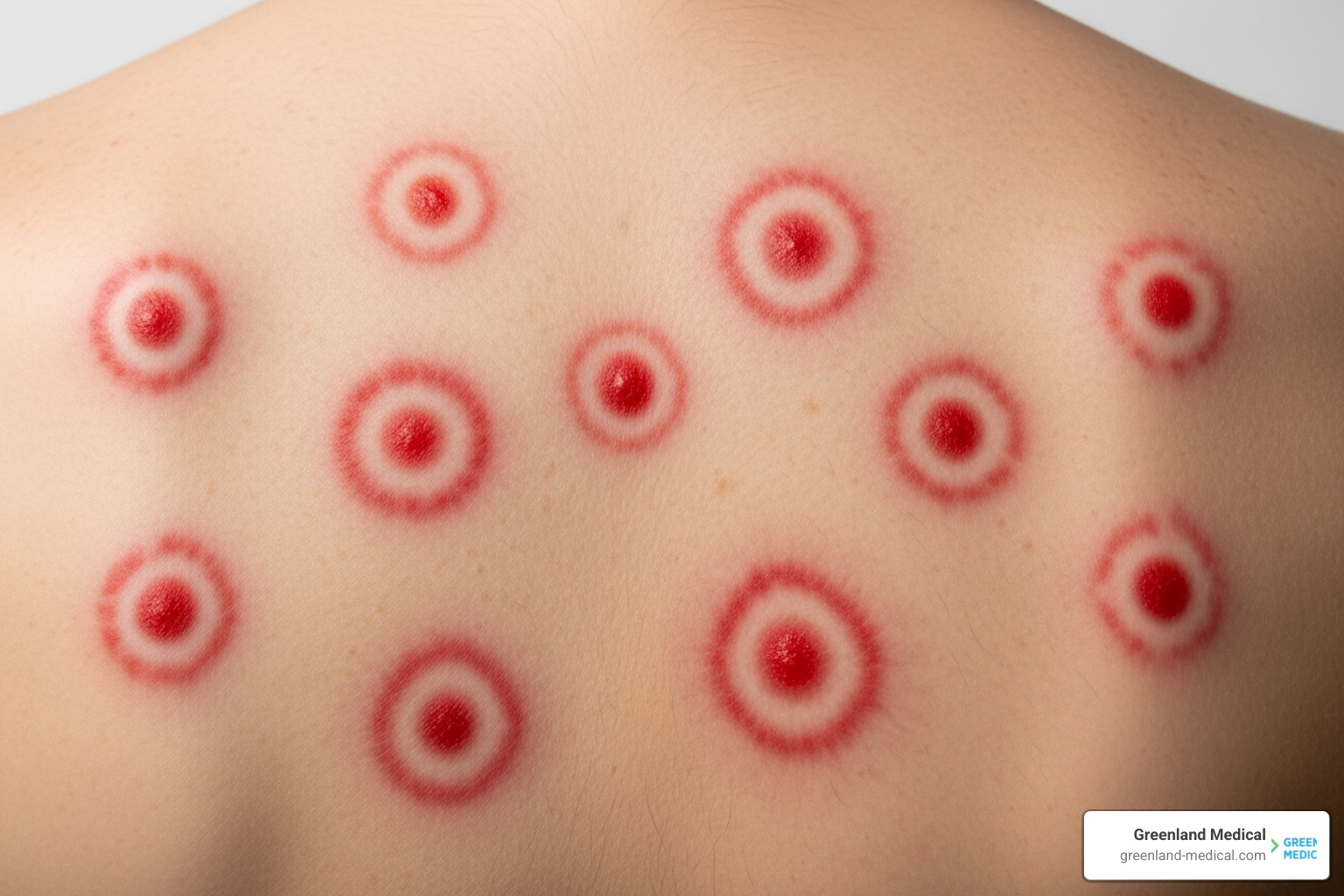
Here's where things get particularly concerning: if you notice multiple expanding rashes on your body, this is a red flag that shouldn't be ignored. These secondary rashes aren't caused by multiple tick bites – they're actually a sign that the Borrelia bacteria have entered your bloodstream and spread throughout your body.
This condition, called early disseminated Lyme disease, means the infection has moved beyond the initial bite site and is now systemic. The bacteria have essentially taken a tour through your circulatory system, setting up new colonies in different areas. When this happens, prompt medical attention becomes even more critical, as the infection is progressing to a more advanced stage.
Is It a Borreliosis Rash or Something Else?
One of the trickiest aspects of identifying a borreliosis rash is that several other common skin conditions can look remarkably similar. Even experienced healthcare providers sometimes find themselves scratching their heads (no pun intended) when trying to make the distinction.
Spider bites are probably the most common impostor. However, spider bites typically become painful and itchy very quickly – often within hours. They might show two tiny puncture marks, and the area usually becomes swollen and tender. In contrast, the Lyme rash develops slowly over days to weeks and is characteristically painless and non-itchy.
Ringworm can also be confusing because it creates a ring-shaped rash with central clearing, much like the classic bull's-eye pattern. The key difference? Ringworm is incredibly itchy and has a distinctive scaly appearance around the borders. It's also caused by a fungal infection, not bacteria.
Hives present as raised, itchy welts that can appear suddenly due to allergic reactions. Unlike the steadily expanding Lyme rash, hives tend to come and go quickly, often moving around the body and causing intense itching.
Other conditions can muddy the waters too. Southern Tick-Associated Rash Illness (STARI) produces a rash that's virtually identical to erythema migrans, though it's caused by a different organism entirely. Fixed drug reactions can create persistent rashes that reappear in the same spot whenever you take a specific medication.
The key differentiators for a true borreliosis rash are its delayed onset (appearing 3-30 days after a tick bite), its steady expansion over time, and its typically painless, non-itchy nature. The rash may feel warm to the touch, but it shouldn't cause significant discomfort.
Given all these potential look-alikes, it's understandable why even medical professionals sometimes need time to make the right diagnosis. If you have a suspicious expanding rash, especially with a history of potential tick exposure, don't try to diagnose it yourself. The CDC provides excellent visual resources to help distinguish between different rashes at Lyme Disease Rashes and Look-alikes from CDC.
Beyond the Rash: Symptoms, Diagnosis, and Complications
While seeing a borreliosis rash is often your first big clue, Lyme disease is a bit like a mystery novel with many chapters. Its symptoms can go far beyond just a spot on your skin! If not caught early, this complex illness can progress through different stages, potentially leading to complications that affect many parts of your body. At Greenland Medical, we truly get that tackling chronic health issues often means looking at the whole picture with an integrated approach. If you're curious about how we blend conventional wisdom with complementary therapies to help you feel better, take a peek at our More info about integrative medicine services.
Early and Late-Stage Symptoms of Borreliosis
The journey of borreliosis symptoms can look a little different for everyone, but they generally unfold in stages. Understanding these stages can help you recognize what's happening in your body.
Early Localized Disease (3 to 30 days post-bite): This is the very first stage, usually showing up about 3 to 30 days after a tick bite. It's when the borreliosis rash (erythema migrans) is most likely to make its appearance. But it's not just about the rash! You might also start feeling a bit under the weather with symptoms that feel a lot like the flu. These early signs can be tricky because they're pretty common and easy to brush off as just a cold. This is especially true if you don't get the rash, or if you don't recognize it for what it is.
You might experience fever and chills, that general 'ick' feeling much like when you're coming down with something. A deep fatigue that sleep just doesn't seem to fix, and even a headache from a mild throb to something more intense. Generalized muscle and joint aches are common, and you might notice tender, swollen lymph nodes, especially close to where the tick bit you.
Early Disseminated Disease (Weeks to Months Post-Bite): If the infection isn't caught and treated during that early localized stage, the Borrelia bacteria can start to spread throughout your body. This usually happens weeks to months after the initial bite, and it brings a wider range of symptoms.
At this point, you might see multiple rashes appearing on different parts of your body – a clear sign the bacteria have travelled. You could also experience severe headaches and neck stiffness, which might mean the infection is affecting your central nervous system. A noticeable symptom can be facial palsy, also known as Bell's Palsy, where one or both sides of your face might droop. Your heart might get in on the act too, with heart palpitations or an irregular heartbeat, sometimes called Lyme Carditis. It's also common for pain to move around your body, known as migratory pain, affecting your joints, bones, tendons, and muscles. You might even feel nerve pain, like shooting sensations, numbness, or tingling in your hands or feet. And sometimes, people report dizziness or shortness of breath, hinting at potential issues with your heart or nerves.
Late Disseminated Disease (Months to Years Post-Bite): Without proper treatment, Lyme disease can unfortunately progress to a late stage, sometimes months or even years after the initial bite. This can lead to more serious and long-lasting problems that really impact daily life.
You might experience chronic arthritis, especially severe pain and swelling in large joints like the knees, which can come and go or stick around persistently. Many people also struggle with brain fog – that frustrating feeling of difficulty concentrating, memory loss, and just not being able to think clearly. It’s a real cognitive impairment. Other neurological symptoms can pop up, like damage to nerves throughout the body, leading to weakness, tingling, or a loss of sensation in your arms and legs. In very rare cases, there can even be inflammation of the brain and spinal cord. And for those with European Lyme disease, a skin condition called Acrodermatitis Chronica Atrophicans can appear, causing skin discoloration, swelling, and thinning, often on the backs of the hands and tops of the feet.
Keeping an eye on how these symptoms might progress is so important for getting help early. If you're dealing with chronic symptoms, our naturopathy services are here to support you. We focus on strengthening your body's natural healing abilities. Feel free to explore More info about naturopathy services to see how we might help.
The Role of the Rash in Diagnosing Lyme Disease
The borreliosis rash truly is a superstar when it comes to diagnosing Lyme disease, especially right at the beginning. In many situations, early Lyme disease can be diagnosed clinically. What does that mean? It means your healthcare provider can often tell you have Lyme just by looking at that special expanding rash and hearing about your possible tick exposure in an area where Lyme is common. They can do this even before any lab tests come back!
This clinical diagnosis is incredibly important. Why? Because the usual blood tests for Lyme disease look for antibodies, and those antibodies take time to build up in your body. In the first few weeks after infection, these tests can easily give you a false negative result, even if you do have Lyme. If we wait for those blood tests to be positive, we could miss the chance for early treatment. That delay can unfortunately mean the disease has more time to progress to those more severe stages we just talked about.
So, when that erythema migrans rash shows up, it's like a clear flag waving, often allowing doctors to start antibiotic treatment right away. Studies have even shown that people who notice the rash first tend to get treated much sooner than those whose diagnosis relies only on other symptoms. Catching it early and treating it promptly is absolutely vital for stopping those more serious complications from taking hold.
Now, here's a crucial point: just because you don't see a rash doesn't mean you don't have Lyme disease. About 20-30% of people with Lyme might never develop one. This is why a thorough look at all your symptoms and your history is so important for a complete clinical assessment. To dive deeper into how seeing a rash can impact treatment timelines, check out this Research on rash presentation affecting treatment time.
Prevention, Treatment, and Post-Lyme Syndromes
The best defense against developing a borreliosis rash and Lyme disease is avoiding tick bites in the first place. But if infection does occur, getting proper treatment quickly makes all the difference. Even with the right care, though, some people find themselves dealing with lingering symptoms that can be frustrating and confusing.
How to Prevent Tick Bites and Reduce Your Risk
Ticks are sneaky little creatures. They're incredibly small, their bites don't hurt, and they love to hide in places you might not think to check. They're most active when the weather's nice—spring through fall—but they can be out anytime it's above freezing. You'll find them hanging out in wooded areas, tall grass, and shrubby spots, just waiting for someone to brush by.
Use repellents wisely to create a barrier against these persistent bugs. For your clothes, shoes, and camping gear, products containing 0.5% permethrin work brilliantly—some items even come pre-treated. On exposed skin, reach for EPA-registered repellents with DEET, picaridin, IR3535, oil of lemon eucalyptus, or 2-undecanone. Just remember that oil of lemon eucalyptus products aren't safe for children under three.
Dress for protection by thinking like you're creating a fortress. Light-colored clothing makes ticks easier to spot, while long sleeves tucked into pants and pants tucked into socks create barriers they can't easily cross. Save the sandals for tick-free zones.
Perform thorough tick checks after any outdoor adventure. A quick shower helps wash off loose ticks, but you'll need to do detective work with a mirror. Check everywhere—your underarms, hairline, ears, waist, between your legs, behind your knees, and even your belly button. Don't forget to inspect your gear and toss outdoor clothes in the dryer on high heat for ten minutes before washing.
Stay on clear paths when hiking, and give tall grass and dense vegetation a wide berth. If you do find a tick, remove it immediately using fine-tipped tweezers. Grasp it close to your skin and pull straight up with steady pressure—no twisting or jerking. The sooner you remove it, the better, since bacteria are much less likely to spread if you get the tick off within 24 hours.
Understanding Post-Treatment Lyme Disease Syndrome (PTLDS)
Here's something that catches many people off guard: even after successful antibiotic treatment, some folks continue experiencing symptoms. This condition, called Post-Treatment Lyme Disease Syndrome (PTLDS), affects an estimated 5% to 15% of people who've had Lyme disease.
The symptoms can feel eerily similar to what brought you to the doctor in the first place. Persistent fatigue that rest doesn't fix, ongoing achiness throughout your body, chronic headaches, joint pain, and memory or concentration difficulties can all linger long after treatment ends.
But here's the important part: these ongoing symptoms don't mean the infection is still active or that the antibiotics failed. Think of it more like the aftermath of a house fire—even after the flames are out, there's still damage to repair. Current theories suggest PTLDS might result from residual tissue damage, immune system responses to bacterial fragments, or even an autoimmune reaction where your body mistakenly attacks healthy tissues.
The controversy around "chronic Lyme disease" often creates confusion. While some people use this term to describe persistent symptoms, the mainstream medical community prefers PTLDS because it doesn't imply ongoing active infection. This distinction matters because continued antibiotic treatment generally doesn't improve PTLDS symptoms and can cause harmful side effects.
The good news? Most people with PTLDS see their symptoms gradually resolve over the following six months. At Greenland Medical, we understand how frustrating these lingering symptoms can be. Our functional medicine approach focuses on addressing the underlying imbalances that may contribute to your ongoing discomfort, supporting your body's natural healing processes. You can learn More info about our approach to Lyme disease treatment.
Frequently Asked Questions about the Borreliosis Rash
When it comes to the borreliosis rash, also known as erythema migrans, there are a few common questions that pop up time and again. Let's clear up some of these widespread queries and misconceptions to help you feel more informed.
Does everyone with Lyme disease get a rash?
This is a fantastic and really important question! The simple answer is no, not everyone with Lyme disease develops the erythema migrans rash. While it's incredibly common, appearing in about 70% to 80% of infected individuals, that still means a significant number of people – up to 30% – might never see one.
This is a critical piece of information, as the absence of a visible rash does not, by any means, rule out a Lyme infection. If you've been out in nature, especially in tick-prone areas, and start experiencing other early symptoms like fever, fatigue, or joint aches, it's absolutely vital to seek medical advice. Even without that tell-tale rash, your health provider can help determine if Lyme disease might be at play.
Is the Lyme disease rash always a "bull's-eye"?
Oh, if only it were that straightforward! This is perhaps the most persistent myth about the borreliosis rash, and sadly, it's a major reason why many Lyme cases are initially missed. The classic "bull's-eye" appearance – a red ring with a clear or bluish center – is certainly one way erythema migrans can look, but it actually occurs in only a minority of cases.
The vast majority of Lyme rashes are much simpler: a uniformly red, expanding patch. They might be circular, oval, or even a bit irregular in shape. The key characteristic is that they grow larger over days or weeks, not necessarily that they have a clear center. So, please, don't wait for that perfect bull's-eye target to appear. Relying solely on that image can lead to overlooking other valid, and much more common, presentations of the rash.
Is the borreliosis rash painful or itchy?
This is another common point of confusion, and understanding the answer can be really helpful. Typically, the erythema migrans rash is neither painful nor itchy. It might feel a little warm to the touch, but it generally doesn't come with the discomfort or intense itching we often associate with other insect bites, allergic reactions, or common skin irritations.
This lack of pain or itchiness can sometimes be a double-edged sword. On one hand, it's a distinguishing feature from many other rashes. On the other, because it's not bothering you, it's easier to dismiss or simply not notice, especially if it's in a hard-to-see spot. Being aware of this characteristic can help you recognize a suspicious rash even if it's not causing any immediate discomfort, prompting you to seek early diagnosis and treatment.
Conclusion: Taking the Next Step
The borreliosis rash is far more complex and variable than most people realize. Throughout this article, we've finded that the famous "bull's-eye" appearance, while iconic, represents only a small fraction of actual Lyme disease rashes. Most erythema migrans rashes are simply red, expanding patches that grow larger over time – no central clearing, no dramatic rings, just a steadily widening area of redness that's easy to overlook or dismiss.
Perhaps most concerning is how differently this rash appears on various skin tones. On darker skin, it can look bruise-like or bluish, leading to delayed diagnoses and more advanced disease. This isn't just a medical curiosity – it's a real health equity issue that affects real people's lives and outcomes.
We've also seen how the rash fits into the bigger picture of Lyme disease. While 70% to 80% of people develop erythema migrans, the absence of a rash doesn't mean you're in the clear. The disease can progress from those early flu-like symptoms to serious neurological problems, heart issues, and debilitating arthritis if left untreated. The borreliosis rash serves as an early warning system – when it's present, it allows doctors to diagnose and treat the infection before blood tests even turn positive.
Even with proper treatment, some people develop Post-Treatment Lyme Disease Syndrome, experiencing lingering fatigue, brain fog, and joint pain that can persist for months. This highlights why prevention remains so important – using repellents, wearing protective clothing, performing thorough tick checks, and removing ticks promptly when you find them.
At Greenland Medical, we understand that chronic illness often requires looking beyond conventional approaches. Whether you're dealing with a suspicious rash, ongoing symptoms after Lyme treatment, or complex health challenges that seem to have no clear answers, we're here to help you find the root causes. Our approach combines the best of modern diagnostics with natural therapies, creating personalized treatment plans that address your unique needs.
If you've been struggling with unexplained symptoms or suspect you might have been exposed to Lyme disease, don't wait. Early recognition and treatment can make all the difference in your long-term health outcomes. Learn more about our functional medicine services and find how our team in Richmond and Twickenham can support your journey back to optimal health.
